Effects of Prolonged Sitting: Could Sitting All Day Be Shortening Your Life?
Have you ever reached the end of a workday and wondered:
"Can sitting all day really be affecting my health that much?"
Maybe you spend most of your day at a desk.
Maybe you work from home and move very little between meetings.
Maybe you exercise regularly and assume that a workout is enough to balance out the hours you spend sitting.
Many people believe the same thing.
But what if the real issue is not how often you exercise?
What if it's how long you remain seated between those workouts?
This is one of the most overlooked health risks of modern life.
Research has linked prolonged sitting to an increased risk of heart disease, Type 2 diabetes, obesity, poor circulation, and premature death. In fact, a large study involving more than one million adults found that people who spent extended periods sitting each day faced a higher risk of early mortality, particularly when sitting time was combined with low levels of daily movement.
What makes prolonged sitting particularly concerning is that its effects often develop quietly.
You may not notice them today.
But over time, your metabolism slows, muscles become less active, blood circulation becomes less efficient, and the cumulative impact can affect both your health and lifespan.
So, how much sitting is too much?
And more importantly, what can you do to reduce the risks if your work or daily routine requires you to sit for hours at a time?
Understanding the effects of prolonged sitting is the first step toward protecting your long-term health and maintaining an active, healthy life for years to come.

What Are the Effects of Prolonged Sitting on Your Health?
Quick Answer
The effects of prolonged sitting extend far beyond temporary stiffness. Long periods of sitting are associated with higher risks of cardiovascular disease, Type 2 diabetes, obesity, metabolic dysfunction, musculoskeletal problems, cognitive decline, and premature death.
Most people think sitting is harmless because it requires little effort.
The problem is that your body was designed for movement.
When you remain seated for hours, muscle activity drops sharply, calorie expenditure decreases, and important metabolic processes begin to slow.
Common health risks of sitting all day include:
Reduced circulation
Higher blood sugar levels
Increased body fat accumulation
Lower calorie burn
Poor posture
Back and neck pain
Greater cardiovascular risk
Reduced mobility over time
According to the World Health Organization, physical inactivity remains one of the leading risk factors for noncommunicable diseases worldwide.
A useful way to think about sedentary behavior is this:
Exercise is important, but movement throughout the day matters too.
Many people focus only on workouts while overlooking the thousands of minutes spent sitting every week.
Read this related article: These 10 Daily Habits Could Be Aging You Faster Than You Think
How Many Hours of Sitting a Day Is Too Much?
Quick Answer
Health risks begin to increase when sitting becomes a large portion of your day, particularly beyond 6–8 hours daily. The risk rises further when sitting occurs in long, uninterrupted blocks.
The Sitting Risk Scale™
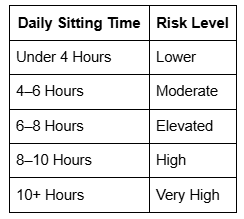
While there is no universally "safe" amount of sitting, research consistently shows a dose-response relationship: the more time people spend sitting, the greater their health risks become.
The goal is not perfection.
The goal is reducing unnecessary sitting whenever possible and breaking up long periods of inactivity.
What Happens to Your Body When You Sit for Long Periods?
The dangers of prolonged sitting affect multiple systems throughout the body.
Metabolism Slows Down
When large muscles in your legs and glutes remain inactive, your body burns fewer calories and processes glucose less efficiently.
This contributes to:
Weight gain
Insulin resistance
Metabolic syndrome
Increased Type 2 diabetes risk
Circulation Becomes Less Efficient
Extended sitting can reduce blood flow, particularly in the lower body.
Over time, this may contribute to:
Swollen ankles
Leg discomfort
Poor circulation
Increased cardiovascular strain
Muscles and Joints Become Deconditioned
The sedentary lifestyle health effects many people notice first include:
Tight hips
Lower back pain
Neck tension
Reduced flexibility
Weak glute muscles
These issues often develop gradually and become normalized until discomfort becomes chronic.
Read this related article: Holiday Travel & Body Pain: How to Protect Your Back, Neck, and Knees on Long Flights and Road Trips
Can Sitting All Day Increase Your Risk of Heart Disease and Diabetes?
Quick Answer
Yes. Research consistently links excessive sitting with increased risks of cardiovascular disease, insulin resistance, obesity, and Type 2 diabetes.
When sitting becomes your dominant daily activity, several risk factors begin to accumulate:
Blood sugar regulation worsens
Fat metabolism declines
Blood pressure may increase
Cardiovascular fitness decreases
This is why sitting too much health consequences extend beyond weight gain.
Many individuals who appear healthy on the outside may still experience metabolic changes associated with prolonged inactivity.
One of the biggest misconceptions is that only people who never exercise are at risk.
Current evidence suggests otherwise.
Even active individuals can benefit significantly from reducing daily sedentary time.
How Sitting Affects Your Lifespan and Long-Term Health
Perhaps the most concerning finding from modern research is the connection between sitting and longevity.
A large study involving hundreds of thousands of adults found that workers who primarily sat throughout the day experienced significantly higher risks of all-cause mortality and cardiovascular-related death.
How Sitting Affects Your Lifespan
The long-term effects of a sedentary lifestyle may include:
Heart disease
Stroke
Type 2 diabetes
Obesity
Cognitive decline
Reduced mobility
Premature mortality
The question is no longer simply:
"Do you exercise?"
A more relevant question may be:
"How much of your waking day do you spend sitting?"
This shift in thinking reflects how health experts increasingly evaluate overall movement patterns rather than exercise alone.
Read this related article: Why Your Body Feels Older Than Your Age: The Hidden Secret to Longevity

What Are the Signs You're Sitting Too Much?
Many people do not realize prolonged sitting is affecting them until symptoms begin interfering with daily life.
Common warning signs include:
Frequent lower back pain
Tight hip flexors
Neck stiffness
Poor posture
Afternoon energy crashes
Reduced mobility
Difficulty standing comfortably for long periods
General physical deconditioning
These symptoms do not automatically mean serious disease is developing.
However, they may indicate that your daily movement levels are lower than they should be.
Recognizing these signs early allows you to make adjustments before more significant health concerns emerge.
Can You Reverse the Effects of a Sedentary Lifestyle?
Quick Answer
In many cases, yes. The body responds remarkably well to consistent increases in daily movement.
The key is not extreme exercise.
It is sustainable behavior change.
The 30-30 Movement Rule™
One practical strategy is simple:
Every 30 minutes of sitting
Move for at least 30 seconds
This may include:
Standing
Stretching
Walking
Climbing stairs
Small interruptions repeated consistently throughout the day can significantly reduce the negative effects of prolonged sitting.
This approach is often more realistic than expecting people to completely overhaul their lifestyle overnight.
How to Reduce Sitting Time Without Changing Your Entire Routine
Reducing sitting does not require drastic changes.
In fact, the most effective strategies are often the simplest.
Practical Strategies
Stand during phone calls
Walk while listening to podcasts
Use stairs when possible
Set movement reminders
Take walking meetings
Stretch between tasks
Alternate between sitting and standing workstations
A Smarter Way to Think About Movement
Many people focus on finding time for a 60-minute workout.
A more effective starting point is creating movement triggers throughout the day.
For example:
Stand after every completed email batch
Walk for five minutes after lunch
Stretch between virtual meetings
Refill your water bottle more frequently
These small actions accumulate into meaningful health benefits over time.
Read this related article: The Longevity Routine Nobody Talks About (That Keeps Your Body Feeling Young After 30)
Does Exercise Cancel Out the Effects of Prolonged Sitting?
Quick Answer
Exercise helps reduce the health risks associated with prolonged sitting, but it may not completely eliminate them.
This remains one of the most misunderstood topics in modern health.
Many people believe:
"I exercise, so sitting all day doesn't matter."
The evidence tells a more nuanced story.
Regular exercise remains one of the best investments in long-term health.
However, movement throughout the day appears to provide additional protection that a single workout cannot fully replace.
The most effective strategy combines:
Regular exercise
Reduced sitting time
Frequent movement breaks
Together, these habits create a stronger foundation for long-term health.
Frequently Asked Questions About the Health Risks of Sitting All Day
How many hours of sitting is unhealthy?
Research generally shows that health risks increase when sitting exceeds 6–8 hours daily, especially without regular movement breaks.
Is sitting all day worse than not exercising?
They are separate but related risks. A person can exercise regularly and still experience negative effects from excessive sitting.
How often should you stand up from your desk?
Many health experts recommend standing or moving at least every 30 minutes to break up prolonged sitting periods.
Does a standing desk solve the problem?
A standing desk can reduce sitting time, but regular movement remains important. Standing still all day is not the same as staying active.
Can prolonged sitting shorten your lifespan?
Research consistently links excessive sitting with increased risks of cardiovascular disease, chronic illness, and premature mortality.
Want Additional Support for Healthy Aging?
Understanding the daily habits that influence how you age is an important first step.
The next step is creating a practical plan that helps you move better, stay stronger, and maintain your independence as you get older.
Read this related article: How to Maintain Mobility as You Age (Without Intense Workouts)
A Smarter Path: G-Mobility Program
If you're looking for guided support, the G-Mobility Program was designed to help people improve movement quality without relying on extreme workouts or complicated fitness routines.
It may be a good fit if your goals include:
Moving with greater ease
Reducing stiffness and discomfort
Building functional strength
Improving confidence in daily movement
Supporting long-term mobility and longevity
The objective isn't exhaustion.
The objective is to build a body that remains capable, resilient, and active for years to come.
Want to Go Deeper? Get Your Copy of Build a Body That Lasts
If this article resonated with you, Build a Body That Lasts explores a more comprehensive approach to aging well.
Rather than focusing solely on lifespan, the book focuses on preserving the qualities that matter most as you get older:
Movement
Strength
Structural health
Independence
Quality of life
It offers practical insights and strategies for people who want to stay active, capable, and self-sufficient throughout life.
For many readers, it's the natural next step after learning about the lifestyle habits that affect aging.
Key Takeaways
The effects of prolonged sitting extend far beyond temporary discomfort. Evidence continues to show strong links between excessive sitting, cardiovascular disease, metabolic dysfunction, musculoskeletal problems, cognitive decline, and reduced longevity.
The most important insight is simple:
Both how long you sit and how often you interrupt sitting matter.
While many people focus exclusively on exercise, research increasingly shows that movement throughout the day plays an important role in protecting long-term health.
If your work requires long hours at a desk, focus on practical habits you can maintain consistently:
Move more frequently
Break up long sitting periods
Stay physically active
Build movement triggers into your routine
Small changes may seem insignificant in the moment, but when repeated daily, they can help reduce the health risks of sitting all day and support better health over the long term.
The goal is not to eliminate sitting entirely. The goal is to avoid letting prolonged sitting become your default state for most of the day.